

LOCAL NEWS | NAGAR | WILDLIFE
Snow Leopard Attack in Upper Pisan, Nagar, Leaves 42 Livestock Reportedly Dead
A snow leopard reportedly entered a livestock enclosure in Upper Pisan, Nagar district, Gilgit-Baltistan, and killed 42 sheep and goats, causing serious losses for local herders. The incident has renewed calls for practical measures that protect livestock and support the conservation of the region’s endangered mountain wildlife.
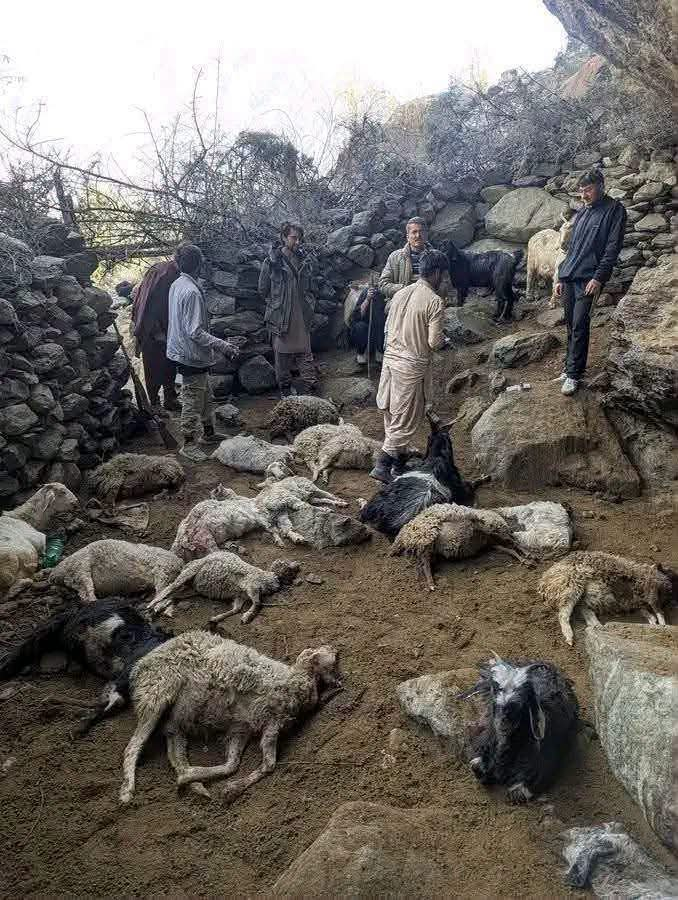
UPPER PISAN, NAGAR: A reported snow leopard attack in Upper Pisan, Nagar, has resulted in the deaths of dozens of domestic animals after a snow leopard entered a livestock enclosure in the mountainous area. According to information shared by local sources, the predator killed 42 sheep and goats in a single incident.
The incident has caused concern among residents, particularly families whose livelihoods depend on livestock farming. In the remote mountain settlements of Nagar, sheep and goats are important household assets, providing income, food and financial security. Losing a large number of animals at once can therefore create serious economic difficulties for an affected family.
The reported incident highlights the continuing challenge of human-wildlife conflict in Gilgit-Baltistan, where communities and snow leopards share the same mountain landscape.
What Happened in Upper Pisan, Nagar?
According to local reports, a snow leopard entered a livestock enclosure in Upper Pisan and attacked animals kept inside. The reported loss stands at 42 sheep and goats, making this a serious incident for the affected livestock owners.
The information circulating about the incident identifies Upper Pisan in Nagar district as the location. However, further details, including the exact time of the attack, the identity of the affected household, the condition of any surviving animals and an official assessment of the loss, have not been independently confirmed.
The incident has drawn attention to the vulnerability of livestock kept in mountain settlements and the need to improve the security of traditional animal enclosures.
Livestock Losses Create Financial Pressure on Mountain Families
For many households in Nagar and other parts of Gilgit-Baltistan, livestock is more than a source of food. Sheep, goats, cattle and yaks represent years of investment, a source of household income and an important part of the local agricultural economy.
A single predator incident can destroy a substantial part of a family's livestock assets. The consequences may include reduced household income, difficulties replacing animals, loss of breeding stock and additional financial pressure during an already challenging season.
These losses can also create fear and frustration among herders who live close to wildlife habitats. When livestock owners receive little support after an attack, the risk of hostility towards predators can increase.
This is why wildlife conservation programmes need to consider the economic realities of mountain communities. Protecting snow leopards and supporting livestock owners should be treated as connected responsibilities.
Human-Wildlife Conflict: A Continuing Challenge in Gilgit-Baltistan
Gilgit-Baltistan is home to important habitats for the snow leopard, one of the most elusive large cats of the high mountains. Its range overlaps with settlements, grazing grounds and seasonal pastures used by local communities.
Snow leopards naturally hunt wild mountain animals, including ibex and blue sheep. However, they may also prey on domestic livestock, particularly where grazing areas and wildlife habitats overlap or where animals are vulnerable in pastures and enclosures.
The loss of livestock can lead to conflict between people and predators. In some cases, herders may consider killing a predator in retaliation. Such responses can threaten an already vulnerable species and undermine years of conservation work.
Conservation organisations working in Pakistan have identified livestock protection, community participation, awareness programmes and compensation or insurance mechanisms as important approaches to reducing this conflict.
Snow Leopards in Nagar and the Mountains of Gilgit-Baltistan
The snow leopard (Panthera uncia) inhabits the high mountain ranges of Central and South Asia, including the Karakoram and Hindu Kush landscapes of Pakistan. In Gilgit-Baltistan, its habitat includes remote mountainous areas where wild prey, rocky terrain and high-altitude ecosystems support its survival.
Nagar, Hunza, Khunjerab and other mountain areas form part of a wider landscape where wildlife and pastoral communities share natural resources. Snow leopards are difficult to observe because they are naturally elusive and live across large, rugged territories.
The species is classified as Vulnerable on the IUCN Red List. Habitat disturbance, illegal hunting, declining wild prey and retaliatory killings linked to livestock losses are among the threats affecting snow leopard populations.
Conservation is therefore not only about protecting an individual animal. It also involves maintaining healthy mountain ecosystems, protecting natural prey and helping local communities live safely alongside wildlife.
How Can Livestock Be Protected from Snow Leopard Attacks?
One practical way to reduce livestock losses is to improve the security of animal enclosures, commonly known as corrals. Traditional stone enclosures can provide shelter, but weak doors, open roofs and unsecured gaps may leave animals vulnerable to predators.
1. Build predator-proof livestock corrals
Properly designed enclosures can reduce opportunities for predators to enter. Depending on local conditions, improvements may include secure doors, reinforced openings, strong roofing or protective mesh. Designs should be adapted to the construction materials and livestock practices of each village.
2. Improve night-time livestock security
Livestock should be kept in secure enclosures at night. Herders and community members can assess vulnerable locations and improve fencing, doors and other weak points.
3. Strengthen herding and monitoring practices
Animals grazing in remote pastures should be monitored carefully. Community-based early-warning arrangements and the reporting of wildlife activity can help herders identify potential risks.
4. Establish reliable livestock compensation mechanisms
Verified compensation or community-based livestock insurance can help families recover part of their financial losses. Such programmes can also reduce pressure for retaliatory action against snow leopards.
5. Support livestock health and household resilience
Livestock vaccination, veterinary support, improved animal management and livelihood assistance can strengthen the resilience of herding households.
Residents Call for Support from Wildlife Authorities
Following the reported loss in Upper Pisan, local residents have called for a balanced response that protects endangered wildlife while safeguarding the livelihoods of mountain communities.
Residents have emphasised the importance of preventive measures, timely assessment of livestock losses and practical support for affected households. They have also called for stronger cooperation between the Wildlife Department, conservation organisations and village communities.
A response to this incident could include:
- A field assessment to verify the reported livestock losses.
- Support for the affected household and information about available compensation or insurance arrangements.
- An inspection of the livestock enclosure to identify possible security improvements.
- Community awareness sessions on safe livestock management and snow leopard conservation.
- Regular coordination between local residents, wildlife officials and conservation organisations.
No official statement or confirmed compensation decision concerning this particular incident was available at the time of publication.
Conservation Initiatives Offer Practical Solutions
Organisations working on snow leopard conservation in Pakistan have supported approaches that combine wildlife protection with community benefits. These include predator-proof corrals, livestock vaccination, community monitoring, awareness programmes and financial support for verified livestock losses.
The Snow Leopard Foundation Pakistan describes its work with mountain communities in Gilgit-Baltistan, Khyber Pakhtunkhwa and Azad Jammu and Kashmir as a combination of research, awareness and community-based conservation. Its programmes include predator-proof enclosures and support for communities affected by wildlife-related losses.
The Snow Leopard Trust also highlights predator-proof corrals and community-based insurance as important tools for reducing livestock losses and improving coexistence between herders and snow leopards.
These approaches demonstrate that conservation can be more effective when local people are partners in planning and implementation, rather than being expected to bear the costs of wildlife protection alone.
Protecting Snow Leopards Must Go Hand in Hand with Protecting Local Livelihoods
The reported snow leopard attack in Upper Pisan, Nagar, is a reminder of the challenges faced by communities living alongside wildlife in the mountains of Gilgit-Baltistan. The reported loss of 42 sheep and goats represents a serious setback for the affected livestock owners.
Snow leopards are an important part of the Karakoram ecosystem and deserve protection. At the same time, families who depend on livestock need practical support when wildlife causes damage to their livelihoods.
Long-term coexistence requires secure livestock enclosures, effective monitoring, fair compensation arrangements, community participation and consistent support from relevant authorities and conservation organisations.
Wildlife conservation and the protection of mountain livelihoods must go hand in hand. The people of Nagar should not have to choose between protecting their animals and protecting the wildlife that shares their landscape.
Editor's Note
The reported figure of 42 livestock animals is based on information shared by local sources. The Hunza Times has not independently verified the exact number or received an official incident assessment at the time of publication. The report may be updated if verified information or an official statement becomes available.
Frequently Asked Questions
Where did the reported snow leopard attack take place?
The reported incident took place in Upper Pisan, Nagar district, Gilgit-Baltistan, Pakistan.
How many livestock animals were reportedly killed?
Local information shared about the incident reports that 42 sheep and goats were killed. The figure has not been independently confirmed by an official assessment.
Are snow leopards found in Nagar Valley?
Yes. Nagar lies within the broader mountain landscape of Gilgit-Baltistan, which supports snow leopard habitat. The species also occurs across the Karakoram and Hindu Kush mountain systems.
Why do snow leopards attack domestic livestock?
Snow leopards naturally hunt wild prey, but they may also prey on sheep, goats and other domestic animals when livestock and wildlife habitats overlap or when domestic animals are vulnerable.
How can herders protect livestock from snow leopards?
Herders can reduce risks by strengthening livestock enclosures, securing doors and roofs, keeping animals in protected corrals at night and improving monitoring in grazing areas.
How can livestock owners receive support after a snow leopard attack?
Available support depends on local programmes and eligibility requirements. Affected households can contact the relevant wildlife authorities or conservation organisations to ask about incident verification, compensation and livestock insurance arrangements.
Why is snow leopard conservation important in Gilgit-Baltistan?
Snow leopards are important predators in high-altitude ecosystems. Protecting them also means conserving their natural prey, habitats and the wider mountain environment.